

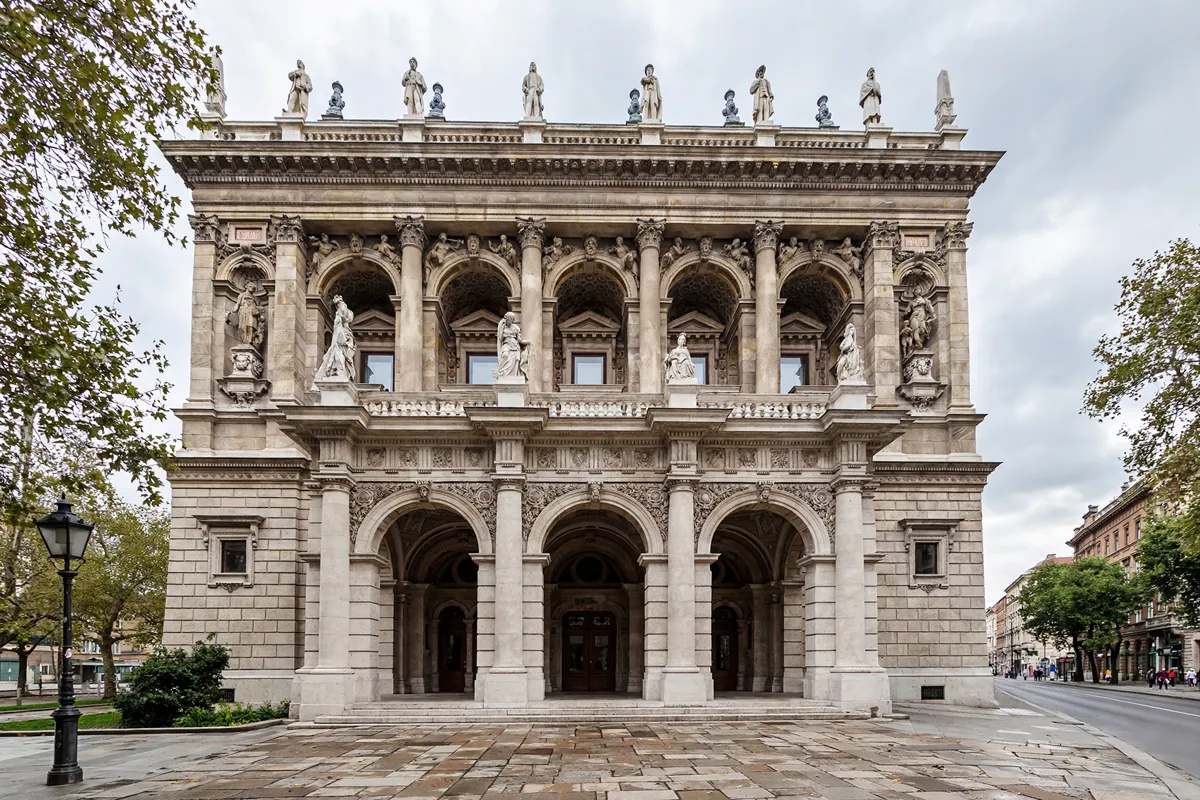
The Opera House and Its Architecture
At Andrássy út 22, the Hungarian State Opera House has a long place in the city’s cultural life. Hungary’s first opera house was inaugurated on 27 September 1884, after almost 15 years of construction.
Designed by Miklós Ybl in the Neo-Renaissance style, it became home to an institution founded by the Government of the Kingdom of Hungary in 1884. Ferenc Erkel and Frigyes Campilli were its first directors.
The Opera House inherited the music, vocal and ballet departments of the National Theatre, continuing a tradition of Hungarian opera performance that began before the building opened. Its auditorium has a horseshoe shape and three storeys.
Look up to see Károly Lotz’s ceiling fresco, The Apotheosis of Music, and the bronze chandelier. After a nearly five-year refurbishment, the building reopened with a gala on 12 March 2022.
The institution’s programme extends beyond opera. The Opera Orchestra performs opera, ballet, gala and symphonic programmes, and its musicians also appear in chamber music and concerto performances. Its roots reach back to the orchestra of the Pest Hungarian Theatre, which began operating in 1837. The orchestra traditionally opens its season with a concert commemorating the Opera House’s anniversary.
The dance ensemble performs as the Hungarian National Ballet. Its work brings classical ballet traditions together with contemporary dance influences, while retaining a focus on character and acting alongside ballet technique. Across the programme, you may find opera and ballet productions, children’s performances, concerts, galas and recitals; the mix and seasonal theme vary.
If you’re staying at Paulay Downtown Apartments, the Opera House is about a six-minute walk away.
Guided Tours and Visitor Access
The guaranteed OperaTour lasts 60 minutes and runs every day in English at 13:30, 15:00 and 16:30. Tours begin in the entrance hall at the information desk and include a short concert by OPERA soloists.
Groups are limited to 30 visitors. Italian, Spanish, German, French, Greek and Hungarian tours can be requested through the OperaTour team; the official ticket listings also show sessions in several of these languages.
The listed tour price is 12,000 HUF per person, or 6,400 HUF for a Hungarian-language tour. Children under 3 enter free. Tickets are available online or at box offices one week in advance. For a private tour, at least 15 tickets are required, and booking requests must be submitted at least one week before the chosen date.
Tour access has a few limits worth planning around. The auditorium is closed to tour visitors during rehearsals, and guided tours are not available during performances. Non-commercial photography is allowed, but flash photography and tripods are not. If seeing the auditorium is a priority, check the tour listing before arranging the rest of your day.
The building provides a lift to the stalls, an accessible box on that level and accessible toilets. Lifts on both sides also reach Floor III. During performances, Hungarian and English surtitles are shown above the stage. Additional subtitle screens or tablets are available in specified seating areas.
Choosing a Performance and Booking Tickets
OPERA’s online listings provide performance and tour schedules. Before choosing a performance, check its individual listing for the date, time and venue: the Hungarian State Opera uses both the Opera House and Eiffel Art Studios, so a programme associated with the institution is not necessarily staged at this address.
Ticket prices vary with supply and demand. OPERA is responsible for tickets bought at its ticket offices, its website or opera.jegy.hu. The programme spans different forms, from ballet and opera to concerts, recitals, galas and performances for children, so use the listings to compare what is on and where it takes place.
There is no official dress code at the Opera House. However, coats, jackets, bulky bags, backpacks, suitcases, umbrellas and musical instruments must be left at the free cloakroom. Allow time to check those items before the performance rather than bringing them into the auditorium.
If you’re deciding between a daytime visit and an evening show, the tour and performance schedules are separate considerations: guided tours do not run during performances, and rehearsals can close the auditorium to tour groups. Check the selected listing for the option that fits your plans.
Getting to the Opera House from Central Budapest
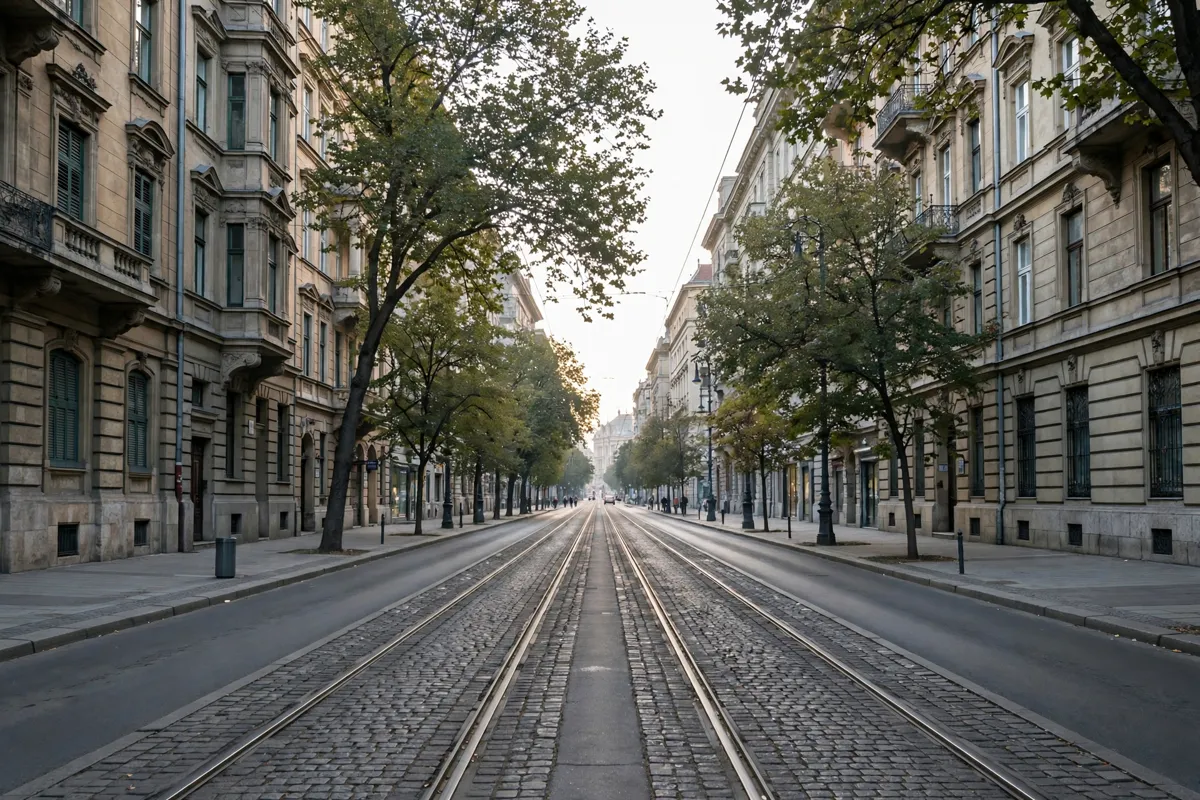
Metro line M1 serves the Opera House. Buses 105 and 210 stop at Opera M, while trolleybuses 70 and 78 stop at Andrássy út (Opera M). For routes, connections and other ways to move around the city, see this guide to Budapest public transport.
Parking is available on Andrássy út, nearby streets and in car parks, though spaces are limited. Weekday parking fees apply from 08:00 to 22:00. If you’re planning to drive, factor in the limited availability and check current parking details before setting out.
For another cultural stop in the area, you can pair the Opera House with a visit to St. Stephen’s Basilica. Check opening and performance plans for each venue separately as you arrange your day.
Before you go
Tour times, performance details and ticket information can change. Check the official site before you go.