

How Budapest's Metro Lines Fit Together
Budapest’s metro has four lines: M1, M2, M3 and M4. M1 has a particular place in railway history: it was the first underground railway in continental Europe, has operated since 1896 and now runs between Vörösmarty tér and Mexikói út.
For an overview, use the BKK metro-network map. It marks line colors, station names, interchanges, accessibility symbols and nearby sights. Check BKK’s timetables and BudapestGO for journey planning, traffic information and current service changes before travelling.
Use the map to identify a line and any interchange on your route, then check the journey details before setting off. BudapestGO also provides real-time trip data, and you can use it to buy tickets and passes.
Tickets, Passes and Validation
- Ticket
- tap a bank card or compatible smart device at a station entrance
Choose a ticket based on how you plan to travel. A standard single ticket covers one uninterrupted trip on one street-level vehicle. On the metro, it allows transfers between metro lines in one direction, but not a return trip. A metro single ticket is valid for 80 minutes after validation, or 120 minutes on night services.
Paper tickets need to be validated at the right point: before entering the metro paid area, or after boarding other vehicles and before they depart.
Mobile 30- and 90-minute tickets allow transfers during their validity period, but you must validate again when changing vehicles. If your journey began while the ticket was valid, you can finish it after the validity period ends.
For repeated travel, 24-hour and 72-hour travelcards allow unlimited trips within Budapest for their stated validity period. They do not need validation after purchase. You can buy tickets and passes in BudapestGO, at BKK customer service centres and ticket offices, or from ticket vending machines, which accept cash and bank cards and are available around the clock.
Pay&GO offers another way to buy and validate one metro single ticket: tap a bank card or compatible smart device at a station entrance. On the 100E Airport Express, one tap can buy up to five tickets. Keep the same card or device handy, as you need to tap it against an inspector’s checker if asked during inspection.
A regular Budapest public-transport single ticket does not cover the 100E Airport Express; it has a separate airport shuttle ticket. The ticket is for one uninterrupted, one-way 100E trip and cannot be used to transfer to or travel on other lines.
The airport shuttle bus single ticket costs 2,500 HUF, and an add-on ticket for holders of specified Budapest, Pest County or Hungary passes costs 1,000 HUF. Passengers under 14 with a Hungarian student ID card and passengers over 65 with proof of age may travel free on the 100E.
A single ticket bought aboard a bus costs 700 HUF and is payable in cash with exact change. You can also pay by bank card on routes 105, 210, 210B and 200E. Check BKK’s official information for current ticket rules and prices.
Using Deák Ferenc tér and Other Central Interchanges
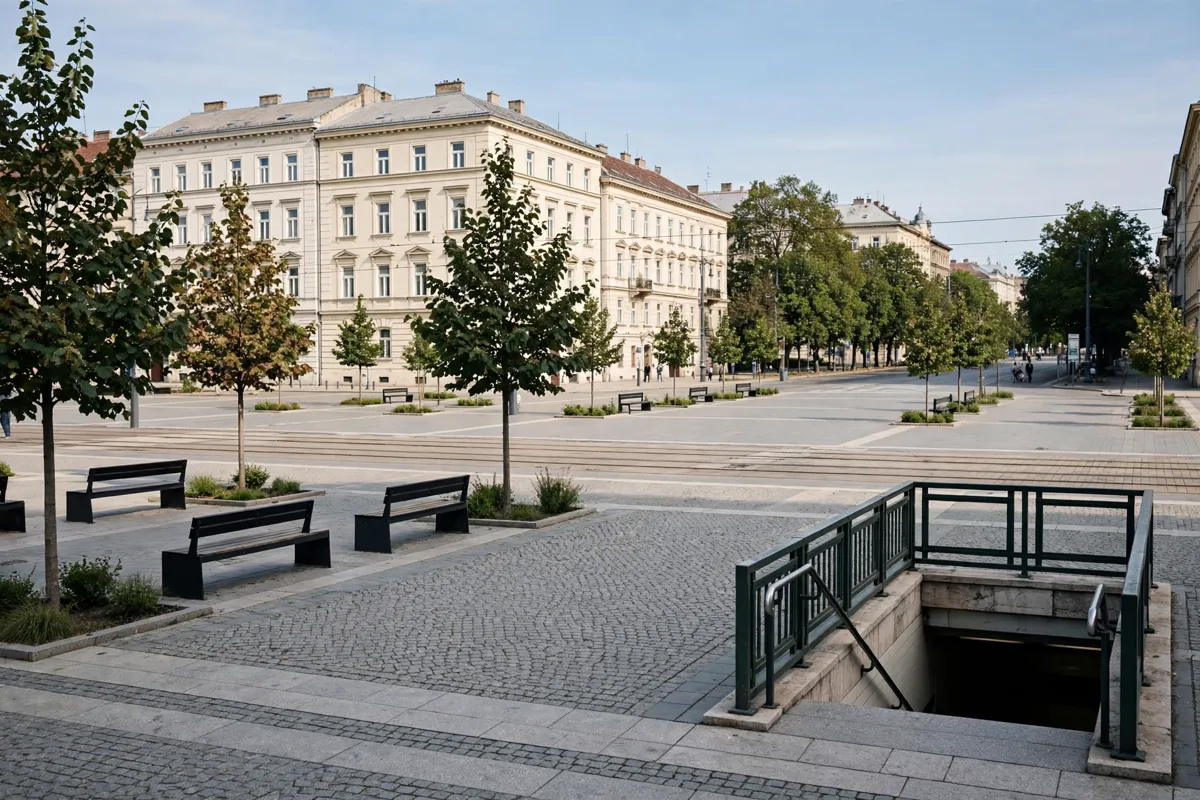
Deák Ferenc tér is a central transport hub and a stop for the 100E Airport Express. It’s about a 4-minute walk from Paulay Downtown Apartments, making it a useful nearby point for checking connections. Kálvin tér is another stop on the airport bus route.
When planning a trip through central Budapest, use the network map to see which lines meet and where you’ll need to change. Station names and interchange points are marked there, along with accessibility symbols and nearby sights. For live route planning and traffic information, check BudapestGO.
The Underground Railway Museum is about a 4-minute walk from the hotel; read this guide to Budapest’s Underground Railway Museum if you’re pairing transport history with a day around the centre.
When to Use Trams, Buses or the Metro
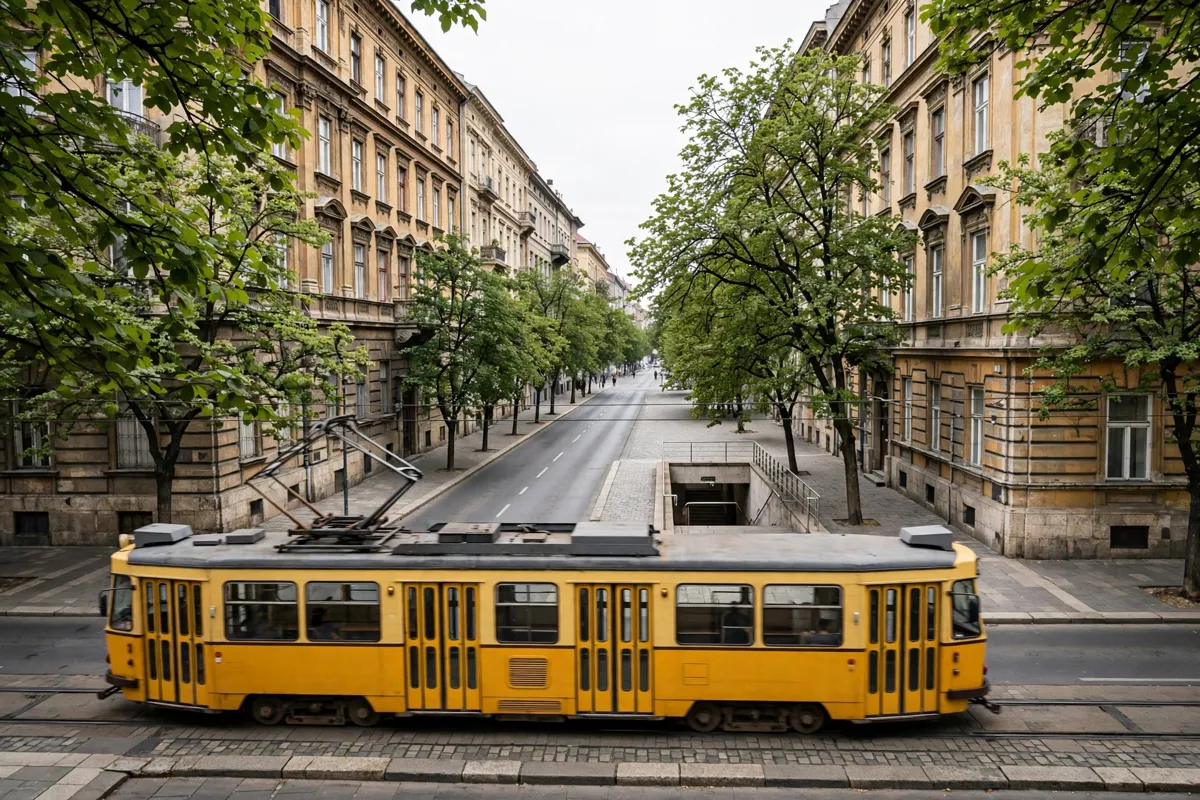
The metro is only one part of Budapest’s public-transport network. The network includes trams, trolleybuses, buses and suburban railway as well. Trams connect important points in the city centre, so check the map and journey planner rather than assuming every central trip calls for the metro.
For late-night travel, tram line 6 runs around the clock. Night buses serve the rest of the city, and their route numbers begin with 9. Check BKK’s current timetables and BudapestGO for routes and service information before you travel.
If your plans include a food stop, the Great Market Hall guide can help you plan that visit alongside your city journeys.
Getting to the Airport and Major Sights
The 100E Airport Express runs between Liszt Ferenc International Airport and Deák Ferenc tér via Kálvin tér. The journey to the city centre takes 40 minutes, and the service operates around the clock, seven days a week. Frequency varies by time, so check BKK’s timetable or BudapestGO when planning your airport trip.
Bus 200E connects Liszt Ferenc Airport 2 with Kőbánya-Kispest, where you can transfer to metro line M3. The 100E airport shuttle single ticket is not valid on 200E; use a valid ticket or pass for that route. Bus 200E operates around the clock according to its usual schedule.
For a side-by-side look at airport journeys, see the guide to transport from Budapest Airport to the city centre. Budapest Liszt Ferenc International Airport is about a 46-minute drive from Paulay Downtown Apartments.
Before you go: Routes, timetables, fares and ticket conditions can change, so check the official BKK site before you go.